Cloud Infrastructure Best Practices for Modern Applications
A comprehensive guide to building robust, secure, and cost-effective cloud infrastructure using AWS, Azure, and GCP.
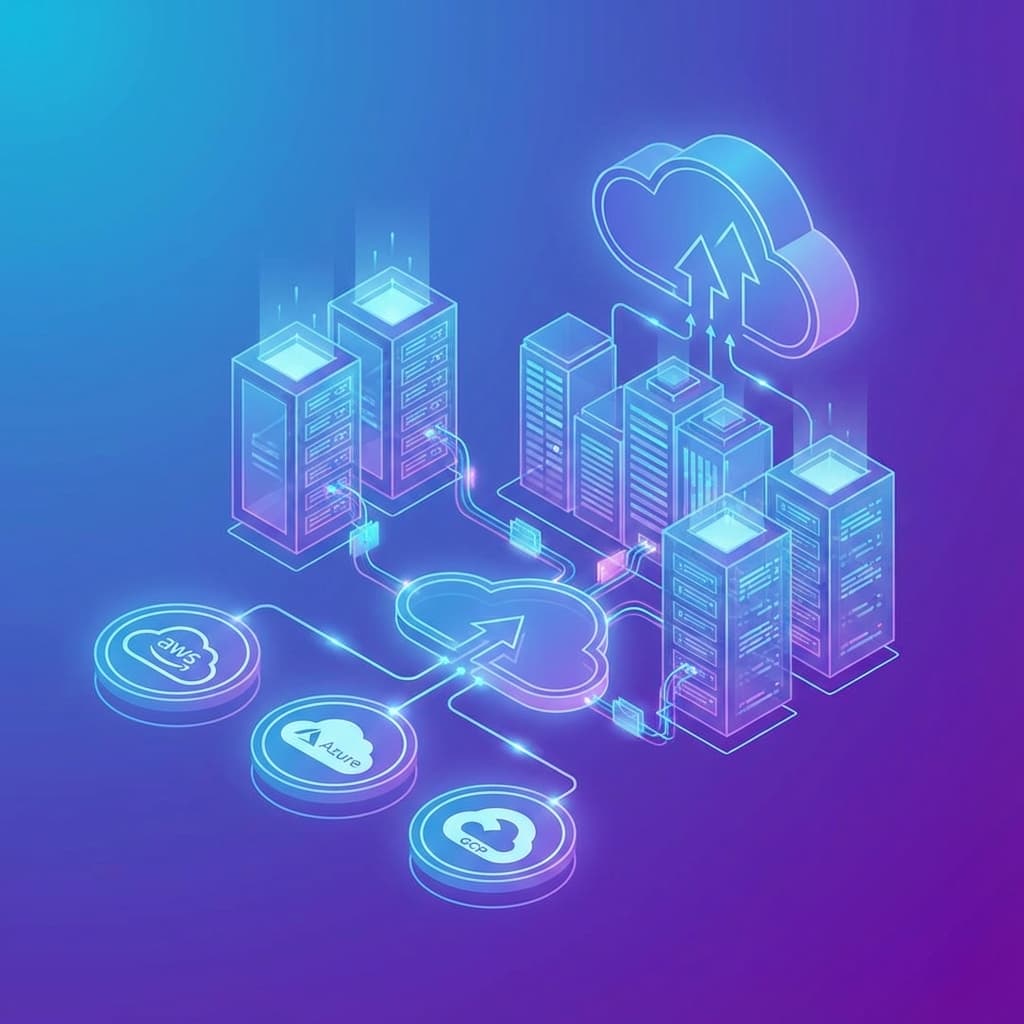
Introduction to Modern Cloud Architecture
Building robust cloud infrastructure is no longer optional. It's essential for any organization that wants to deliver reliable, scalable applications. This guide covers the fundamental principles and best practices for designing cloud infrastructure that stands the test of time.
Whether you're working with AWS, Azure, or GCP, these principles apply universally and will help you make informed architectural decisions.
Core Principles
1. Design for Failure
In distributed systems, failure is not a matter of if but when. Your architecture should anticipate and gracefully handle failures at every level:
Key Strategies:
- Deploy across multiple availability zones
- Implement health checks and automatic failover
- Use circuit breakers for external service calls
- Design for graceful degradation
# Example: Multi-AZ deployment with Auto Scaling
Resources:
  WebServerGroup:
    Type: AWS::AutoScaling::AutoScalingGroup
    Properties:
      VPCZoneIdentifier:
        - !Ref PublicSubnet1
        - !Ref PublicSubnet2
        - !Ref PublicSubnet3
      LaunchTemplate:
        LaunchTemplateId: !Ref LaunchTemplate
        Version: !GetAtt LaunchTemplate.LatestVersionNumber
      MinSize: '2'
      MaxSize: '10'
      DesiredCapacity: '3'
      HealthCheckType: ELB
      HealthCheckGracePeriod: 300
2. Security First
Security must be baked into your infrastructure from day one:
The Shared Responsibility Model:
- Cloud Provider: Physical infrastructure, hypervisor, managed services
- Your Team: Data, identity management, application security, network configuration
Essential Security Measures:
| Layer | Measure | Implementation | |-------|---------|----------------| | Network | VPC isolation | Private subnets, security groups | | Compute | Minimal attack surface | Hardened images, patch management | | Data | Encryption | At-rest and in-transit encryption | | Identity | Least privilege | IAM roles, MFA enforcement | | Monitoring | Detection & response | CloudTrail, GuardDuty |
3. Cost Optimization
Cloud costs can spiral without proper governance:
# Example: Right-sizing recommendation logic
def analyze_instance_utilization(metrics):
    recommendations = []

    for instance in metrics:
        avg_cpu = instance['cpu_utilization_avg']
        max_cpu = instance['cpu_utilization_max']

        if avg_cpu < 20 and max_cpu < 50:
            recommendations.append({
                'instance_id': instance['id'],
                'current_type': instance['type'],
                'recommendation': 'downsize',
                'potential_savings': calculate_savings(instance)
            })
        elif avg_cpu > 80:
            recommendations.append({
                'instance_id': instance['id'],
                'current_type': instance['type'],
                'recommendation': 'upsize_or_scale',
                'reason': 'consistent high utilization'
            })

    return recommendations
Cost Optimization Strategies:
- Reserved instances for predictable workloads
- Spot instances for fault-tolerant tasks
- Auto-scaling to match demand
- Regular resource cleanup and right-sizing
Infrastructure as Code
Why IaC Matters
Infrastructure as Code (IaC) transforms infrastructure management from a manual, error-prone process to a versioned, repeatable practice:
Benefits:
- Version control for infrastructure changes
- Consistent environments across dev/staging/production
- Automated provisioning and updates
- Documentation as code
Tool Comparison
| Tool | Best For | Learning Curve | Multi-Cloud | |------|----------|----------------|-------------| | Terraform | General purpose, multi-cloud | Medium | Excellent | | CloudFormation | AWS-native, deep integration | Medium | AWS only | | Pulumi | Developer-friendly, existing languages | Low-Medium | Excellent | | CDK | AWS with programming languages | Medium | AWS only |
Terraform Best Practices
# Example: Modular Terraform structure
# modules/vpc/main.tf
resource "aws_vpc" "main" {
  cidr_block           = var.vpc_cidr
  enable_dns_hostnames = true
  enable_dns_support   = true

  tags = merge(var.common_tags, {
    Name = "${var.environment}-vpc"
  })
}

# Outputs for use by other modules
output "vpc_id" {
  value = aws_vpc.main.id
}

output "private_subnet_ids" {
  value = aws_subnet.private[*].id
}
Key Practices:
- Use modules for reusable components
- Maintain separate state files per environment
- Implement remote state with locking
- Use workspaces or directories for environment separation
Container Orchestration
Kubernetes Architecture
For complex applications, Kubernetes provides powerful orchestration:
# Example: Production-ready deployment
apiVersion: apps/v1
kind: Deployment
metadata:
  name: web-app
spec:
  replicas: 3
  selector:
    matchLabels:
      app: web-app
  template:
    metadata:
      labels:
        app: web-app
    spec:
      containers:
      - name: web-app
        image: myapp:v1.2.3
        resources:
          requests:
            memory: "256Mi"
            cpu: "250m"
          limits:
            memory: "512Mi"
            cpu: "500m"
        livenessProbe:
          httpGet:
            path: /health
            port: 8080
          initialDelaySeconds: 30
          periodSeconds: 10
        readinessProbe:
          httpGet:
            path: /ready
            port: 8080
          initialDelaySeconds: 5
          periodSeconds: 5
Managed vs Self-Managed
| Aspect | Managed (EKS/GKE/AKS) | Self-Managed | |--------|----------------------|--------------| | Control Plane | Managed by provider | Your responsibility | | Cost | Higher hourly rate | Lower, but ops overhead | | Complexity | Simplified | Full flexibility | | Best For | Most organizations | Specific requirements |
Observability
The Three Pillars
- Metrics: Numerical data about system behavior
- Logs: Discrete events with context
- Traces: Request flow across services
# Example: OpenTelemetry configuration
receivers:
  otlp:
    protocols:
      grpc:
        endpoint: 0.0.0.0:4317
      http:
        endpoint: 0.0.0.0:4318

processors:
  batch:
    timeout: 1s
    send_batch_size: 1024

exporters:
  prometheus:
    endpoint: "0.0.0.0:8889"
  jaeger:
    endpoint: jaeger:14250
  loki:
    endpoint: http://loki:3100/loki/api/v1/push

service:
  pipelines:
    traces:
      receivers: [otlp]
      processors: [batch]
      exporters: [jaeger]
    metrics:
      receivers: [otlp]
      processors: [batch]
      exporters: [prometheus]
    logs:
      receivers: [otlp]
      processors: [batch]
      exporters: [loki]
Disaster Recovery
RTO and RPO
- RTO (Recovery Time Objective): How quickly you need to recover
- RPO (Recovery Point Objective): How much data loss is acceptable
| DR Strategy | RTO | RPO | Cost | |-------------|-----|-----|------| | Backup & Restore | Hours | Hours | Low | | Pilot Light | Minutes to Hours | Minutes | Medium | | Warm Standby | Minutes | Seconds | High | | Multi-Site Active | Seconds | Zero | Very High |
Conclusion
Building robust cloud infrastructure requires careful planning and adherence to proven best practices. Remember these key takeaways:
- Design for failure from the start
- Implement security at every layer
- Use Infrastructure as Code for consistency
- Invest in observability early
- Plan for disaster recovery based on business needs
Need help designing your cloud infrastructure? Get in touch for a consultation.
Writing about AI training, LLMs, and software engineering. Building AI products at Nomos Insights.
Continue Reading